The church of Sant Bartomeu i Santa Tecla: history of the church on La Punta
History of Sitges parish church: medieval origins, the Baroque building of 1665-1672, altarpieces, Triay's organ, the bell tower and the losses of 1936.
Published 4 min read
_-_14.jpg)
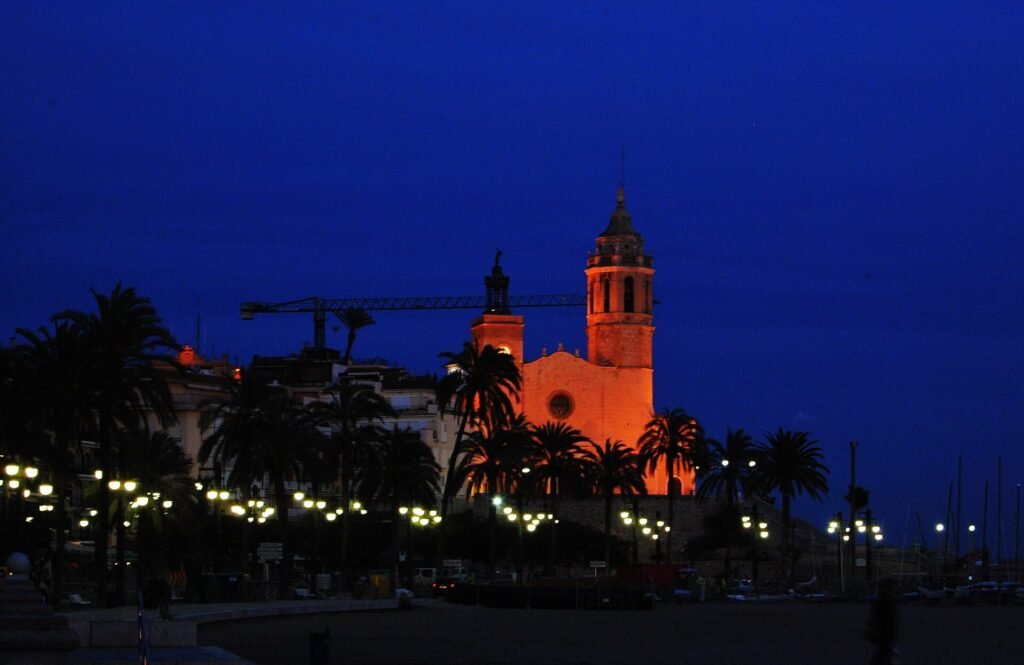
Few images sum up Sitges as well as the outline of its parish church on the headland of La Punta, with the sea at its feet. Yet the building we see today is only the latest chapter of a long story: several churches stood on this same spot one after another, and the present Baroque one was raised in the 17th century and then completed and altered over the following two centuries.
Several churches on one site
The parish church occupies the old castle precinct, in the area now known as the Baluard. According to Catalunya Romànica, published by the Enciclopèdia Catalana, Bishop Guislabert of Barcelona built a Romanesque church dedicated to Saint Tecla here in 1035. In the 14th century the church was rebuilt in Gothic style: the Barcelona Provincial Council (Diputació de Barcelona) heritage inventory dates its consecration to 1317, while the Enciclopèdia states that it was finished by around 1322, with the high altar dedicated to Saint Tecla and a chapel of Saint Bartholomew, who would eventually become co-patron. Two 14th-century ossuaries survive inside from that period, one of them belonging to Bernat de Fonollar, lord of Sitges. We explain the medieval background in Sitges castle and town walls.
The Baroque church: 1665–1672
You will often read that the present church was built “between 1672 and 1700”, but the documents gathered in the Diputació inventory tell a different story. On 14 April 1664 the town agreed to build a new church; work began on 8 October 1665 and the church was consecrated on 19 July 1672. The inventory credits the building to Sebastià Vives. In 1674 the square tower to the left of the façade, the Torre del Comunidor, was completed. What did continue until the turn of the century was the furnishing of the interior: altarpieces and the organ arrived over the following decades. In 2022 Sitges marked the church’s 350th anniversary with the book Traient la PUNTA a la història by local researcher Blai Fontanals.
The result is a basilica-plan church with three naves, a polygonal apse, side chapels, a choir at the west end and upper galleries. The façade has three round-arched doorways, a rose window and a wavy cornice with pinnacles.
Altarpieces and organ
Between 1684 and 1701 the parish, the town council and the confraternities commissioned a set of Baroque altarpieces. The Mare de Déu del Roser (Our Lady of the Rosary) altarpiece went up in 1684, paid for by its confraternity; the Sant Elm altarpiece bears the dates 1688 and 1691; the Immaculada altarpiece was finished in 1694 and gilded in 1701; and in 1699 the town council commissioned the sculptor Joan Roig to make the altarpiece of the Mare de Déu dels Dolors (Our Lady of Sorrows).
The organ is another highlight. The contract with the organ builder Bartomeu Triay was signed on 27 December 1694, and in 1695 Joan Roig was commissioned to make the case; the painted figures of Saint Tecla and Saint Bartholomew are by Sebastià Font. The frieze bears the date 1696, although other sources date the instrument to 1699. After several alterations, the organ builder Gerhard Grenzing reconstructed it in 1985: only the case survives from the Baroque original.
The 19th century: chapels, bell tower and narthex
Between 1854 and 1856 the Cros family of local master builders enlarged the church and built the Chapel of the Blessed Sacrament. The octagonal bell tower on the right was remodelled to a design by the priest Mossèn Clara, with master builder Jaume Sunyer, and blessed on 8 December 1863; the narthex, or porch, on the façade dates from the same year. In 1868, after the Torre de les Hores on Carrer Major was demolished, the town’s bells and clock were moved to the church.
1936 and rebuilding
At the start of the Spanish Civil War the interior suffered heavy losses. The inventory records that the original image of Our Lady of Sorrows was destroyed on 21 July 1936, that the image of Our Lady of the Rosary was thrown into the sea that same year, and that the Immaculada altarpiece lost many of its figures. After the war what could be replaced was replaced: a new Holy Sepulchre arrived in 1946, of which only the original head had survived, and in 1948 a Pietà by the Sitges sculptor Pere Jou.
Today the parish remains at the heart of the town’s religious and festive life: its two patron saints set the calendar, with the Festa Major of Sant Bartomeu in August and the feast of Santa Tecla in September. To plan your visit, see the listing for the church of Sant Bartomeu i Santa Tecla.
Sources and further reading
- Església parroquial de Sant Bartomeu i Santa Tecla — Heritage inventory, Diputació de Barcelona (in Catalan)
- Orgue de l’església parroquial de Sitges — Heritage inventory, Diputació de Barcelona (in Catalan)
- Retaule de la Mare de Déu dels Dolors — Heritage inventory, Diputació de Barcelona (in Catalan)
- Sant Bartomeu i Santa Tecla de Sitges — Catalunya Romànica, Enciclopèdia Catalana (in Catalan)
- The book “Traient la PUNTA a la història” marks the church’s 350th anniversary — Sitges Tourist Board
Keep reading
Historic buildings
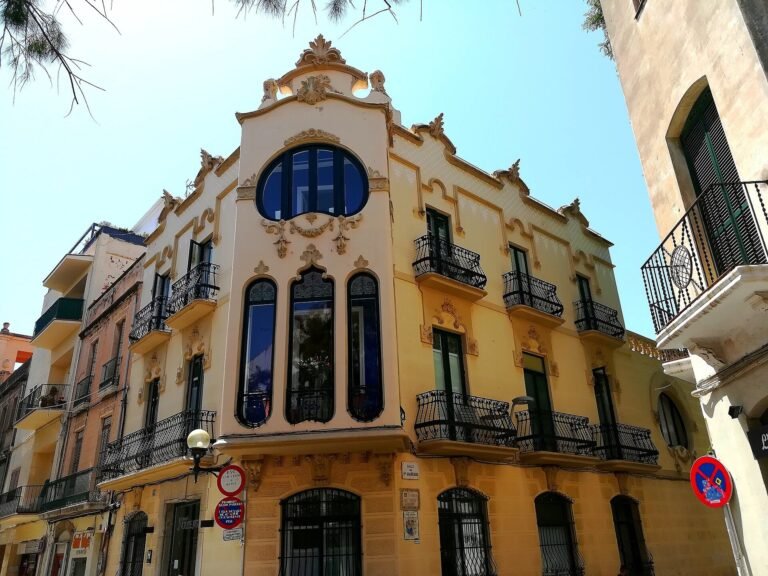
The houses of the americanos
Who the americanos of Sitges were, why they built grand houses on returning from Cuba, and which documented examples can be seen in the town centre today.
Historic buildings
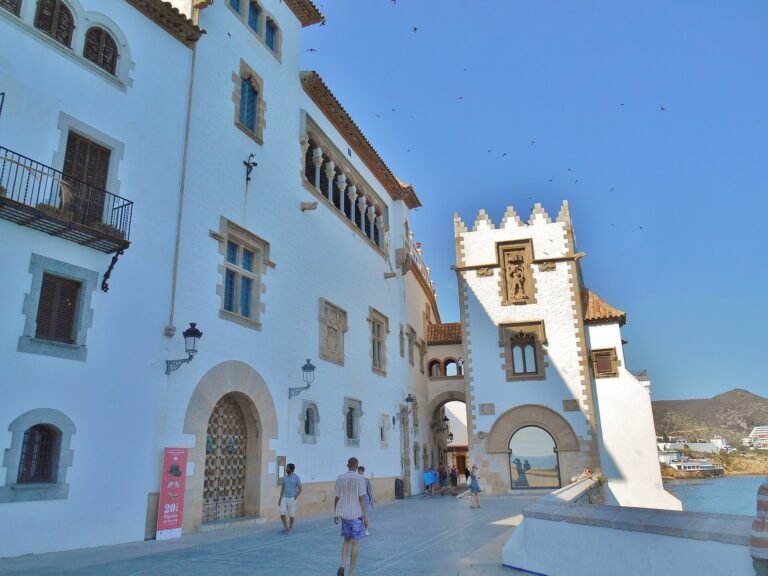
The Palau de Maricel and its construction
From the medieval Hospital of Sant Joan to Charles Deering's home: how Maricel was built between 1910 and 1918, its halls and its uses up to the museum.
Historic buildings
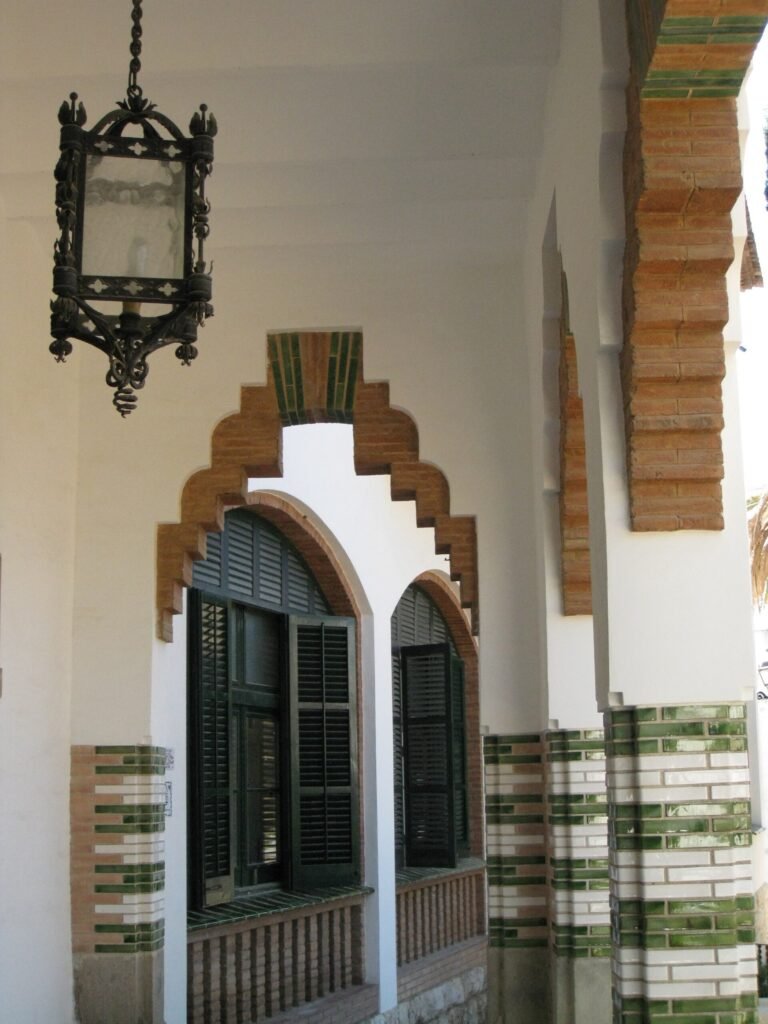
The Hospital de Sant Joan Baptista: from medieval hospital to Modernista building
From Bernat de Fonollar's medieval hospital, sold to Deering to build Maricel, to the Modernista building by Font i Gumà that opened in 1912.