Sant Sebastià cemetery and its artistic heritage
History of Sitges' Sant Sebastià cemetery: blessed in 1814, with Francesc Cros's gateway, tombs by Llimona and Rogent and the artists buried there.
Published 4 min read
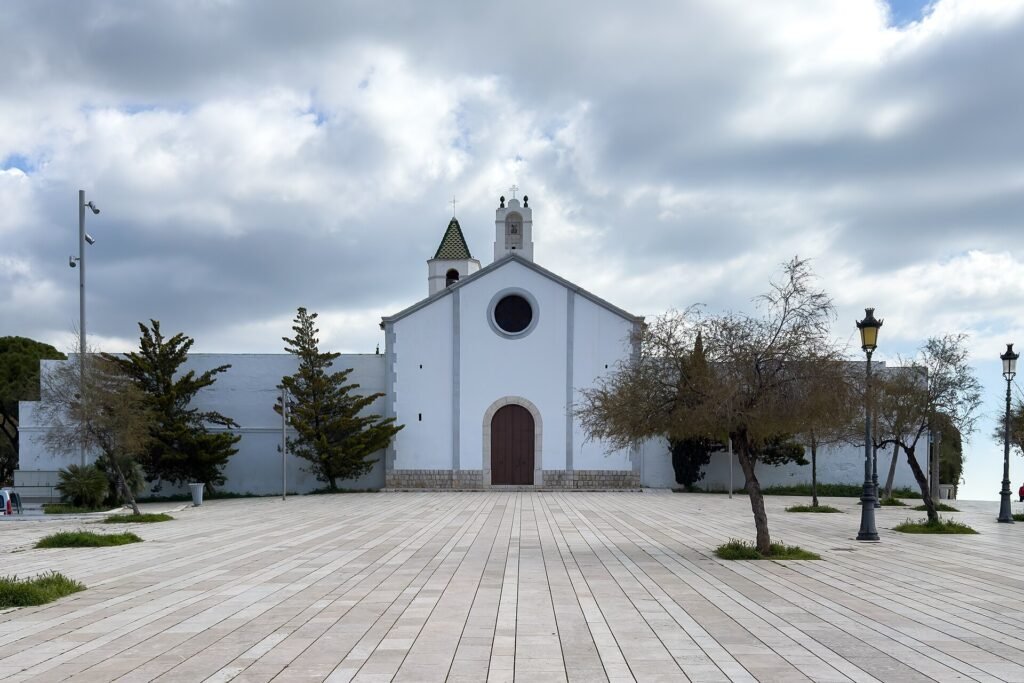

Beside Sant Sebastià beach, a few minutes from the old town, lies one of the most interesting burial grounds on the Catalan coast. The Sant Sebastià cemetery is a place of remembrance for the people of Sitges and, at the same time, a remarkable collection of 19th- and 20th-century sculpture and architecture, so much so that it is part of the European Cemeteries Route.
A cemetery founded in 1814
Until the early 19th century the people of Sitges were buried beside the parish church on La Punta. A move had been agreed as early as 1773, but it never happened. The decisive push came with an order from the Regency in December 1813 banning cemeteries inside towns: work went ahead quickly and the new burial ground was blessed on 23 February 1814. It has been altered and enlarged several times since; a new burial area was needed in 1974, and since 1982 Sitges has also had a second cemetery, Les Pruelles.
The name comes from the neighbouring Sant Sebastià chapel. It is said to be very old, but no written records confirm this; a date of 1614 on one of its walls points to a major remodelling. The present chapel was begun in 1857 and opened on 23 August 1861, and it has served as the cemetery chapel ever since.
Francesc Cros’s gateway
Both the chapel and the cemetery are linked to the Sitges master builder Francesc Cros i Massó (1793–1869), a member of a family of builders who also worked on the enlargement of the parish church. The cemetery entrance is a monumental gateway that recalls a church façade: a central section crowned by a triangular pediment with a stone cross, a large round-arched portal dated 1864, and reliefs painted magenta (garlands, ribbons and a Chi-Rho) against white walls. Among them is the Latin inscription “MORTUI RESURGENT” (“the dead shall rise”). Inside, the layout is typical of late 19th-century cemeteries: perimeter walls lined with burial niches and, in the central area, large family mausoleums.
Mausoleums and sculptors
Much of the cemetery’s character comes from families who grew rich in the 19th century, many of them “americanos” who had made their fortunes across the Atlantic (see trade with the Americas and the indianos). They commissioned tombs from leading sculptors and architects. The Barcelona Provincial Council (Diputació de Barcelona) heritage inventory and other sources mention works by Josep Llimona, Josep Reynés, Agapit Vallmitjana, Manuel Fuxà, Frederic Marès, Alessandro Mariotti, Joan Rebull and the Sitges-born Pere Jou, as well as architects such as Elies Rogent and Enric Sagnier. Two documented examples:
- The Joan Pintó mausoleum, Neo-Gothic, designed by the architect Elies Rogent (1856).
- The mausoleum of the family of Josep Cros Juliana, crowned by a figure by Josep Llimona (1908).
People often speak of “Modernista mausoleums”, and there are some, but the whole is more varied, ranging from Neoclassical and Neo-Gothic to Modernisme and Noucentisme.
Who is buried here
According to the Diputació inventory, the cemetery is the resting place of the painters Joan Roig i Soler (1852–1909) and Joaquim Sunyer (1874–1956), whom we profile in Joaquim Sunyer and Mediterranean painting, and of the sculptor Pere Jou (1891–1964), as well as many Sitges artists: Alfred Sisquella, Emili Grau Sala, Joaquim de Miró, Artur Carbonell, Albert Bartés, Artur Ramon, Agustí Ferrer Pino, Josep Vidal and Arcadi Mas i Fondevila. The company that manages the municipal cemeteries also mentions writers and local figures such as Trinitat Catasús, Salvador Soler i Forment, Josep Carbonell i Gener, Rita Benaprés and Miquel Utrillo. A niche here also holds Pepeta Moreu, a teacher at the Cooperativa Mataronina who died in Sitges in 1938; the story often told is that the young Antoni Gaudí proposed to her and that she turned him down.
Heritage you can visit
Because of its artistic interest, the cemetery is a member of the Association of Significant Cemeteries in Europe (ASCE) and part of the European Cemeteries Route. Free guided tours, such as the “Ruta de les Ànimes”, have been organised around All Saints’ Day. Remember that it is a working cemetery, so visits call for respect and discretion. You will find practical information in the listing for the Sant Sebastià cemetery.
Sources and further reading
- Cementiri Municipal de Sitges — Heritage inventory, Diputació de Barcelona (in Catalan)
- Ermita de Sant Sebastià — Heritage inventory, Diputació de Barcelona (in Catalan)
- San Sebastià Cemetery, Sitges — Association of Significant Cemeteries in Europe (ASCE)
- Sitges cemeteries — Àltima, operator of the municipal cemeteries
- Personatges enterrats als cementiris del Penedès — Surt de Casa (in Catalan)
Keep reading
Historic buildings
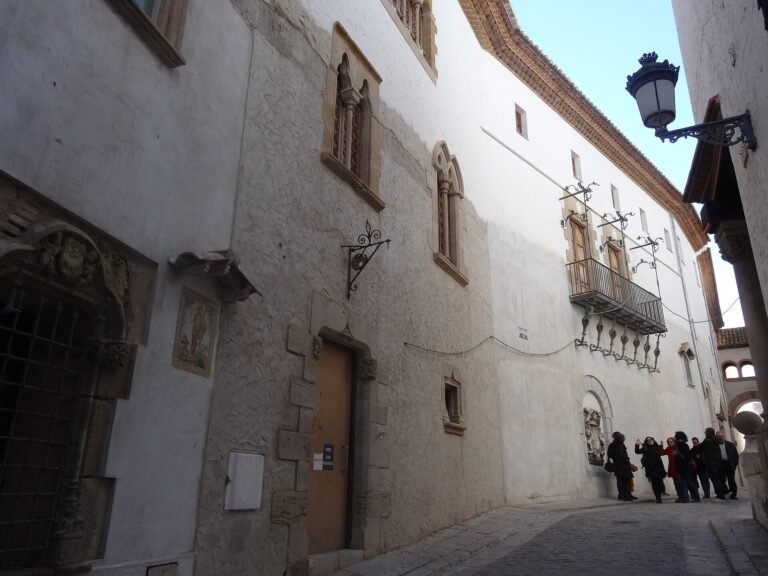
The Cau Ferrat and Santiago Rusiñol
From the studio Rusiñol built from two fishermen's houses in 1893–1894 to the museum opened in 1933 and restored in 2010–2014: the Cau Ferrat's story.
Historic buildings
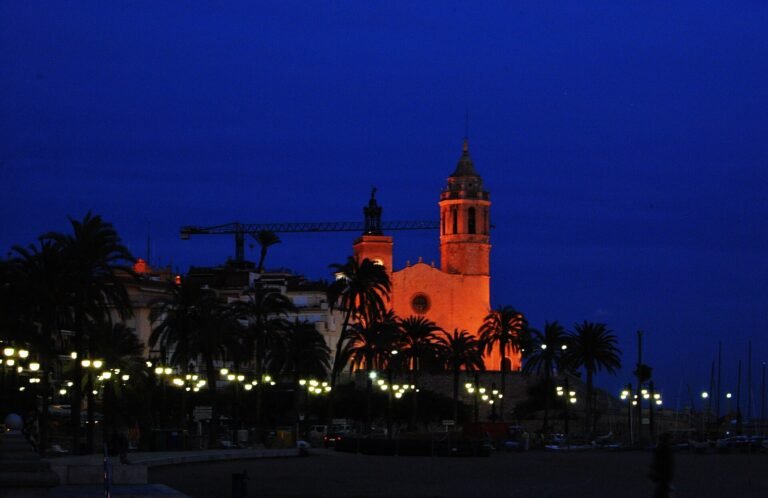
The church of Sant Bartomeu i Santa Tecla: history of the church on La Punta
History of Sitges parish church: medieval origins, the Baroque building of 1665-1672, altarpieces, Triay's organ, the bell tower and the losses of 1936.
Historic buildings
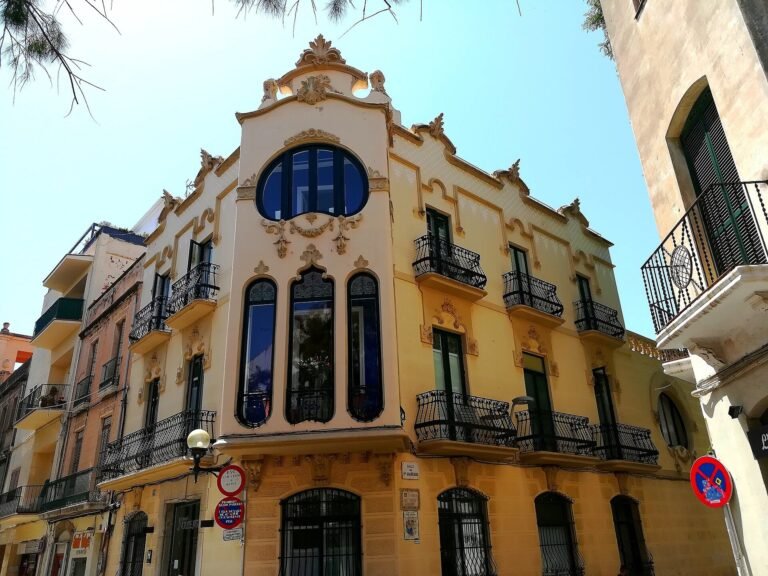
The houses of the americanos
Who the americanos of Sitges were, why they built grand houses on returning from Cuba, and which documented examples can be seen in the town centre today.