Legends and folk tales of Sitges
The Virgin of El Vinyet, the treasure caves and the sirens of the Garraf coast: the legends of Sitges collected by Joan Amades, told as legends.
Published 4 min read
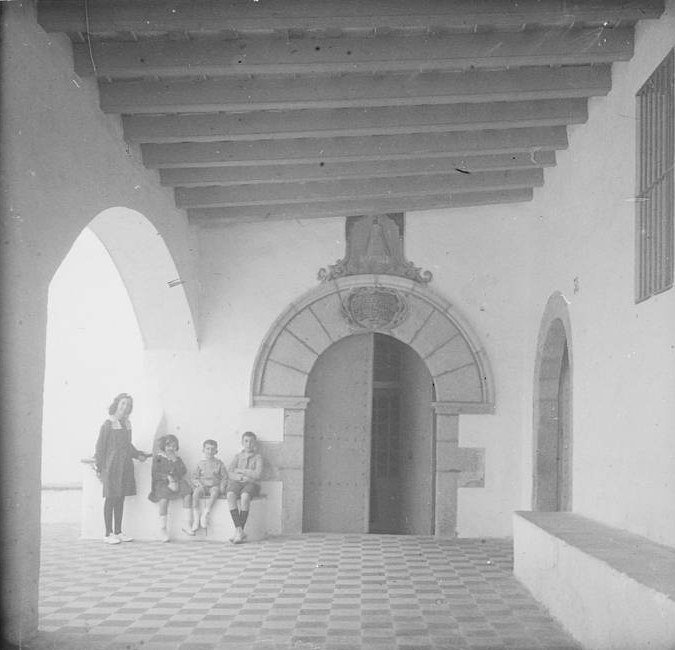

Sitges does not have a large repertoire of its own legends, and almost everything that is known reaches us through a single route: the folklorist Joan Amades (1890–1959), who collected oral tradition from all over Catalonia. His texts about the town were published in the volume Llegendes de Sitges (El Mèdol, 2004), and in 2006 the Diputació de Barcelona’s Cultural Heritage Inventory listed several of them as intangible heritage. What follows are legends, not history: stories that speak of the fears, devotions and imagination of a seafaring town.
The Virgin found beneath a vine
The best-known legend explains the origin of the sanctuary of El Vinyet. According to the version recorded in the inventory, a Moorish slave found a small image of the Virgin beneath a vine on an estate belonging to Can Milans dels Ferrers. Every time he tried to hand it to the owner’s son, the image vanished and reappeared in the vineyard, until the owner decided to build a chapel on the spot. Other versions say the water turned red when the image was washed, or that the Milans family kept it in a household chapel and it returned to the vineyard on its own. Tradition also links the vine to Malvasia.
The documented history is different: according to the Enciclopèdia Catalana, a church called Santa Maria de Sitges already stood there, mentioned in a document from the late 11th or early 12th century and again in 1174.
The caves and their treasures
Beside the road to Vilanova, close to the sea, there is a group of small caves of little interest to cavers, known in Sitges simply as “les coves”. Tradition turned them into the entrance to vast galleries reaching as far as Vilanova i la Geltrú, and Amades gathered several stories around them:
- A fisherman’s son gets lost inside while his father is working the nets, and comes back a hundred years later, old and barely able to speak his own language.
- A treasure, marked by a gold ring set into a rock, lies beyond a moss-covered bridge. Four greedy men who crossed it fell into the abyss and were never seen again. Other tales speak of giants embedded in the walls who guard the riches, which can be taken on the night of Sant Joan as long as one gets out before midnight.
- Two young men competing for a wealthy heiress go looking for a flower that blooms in the caves only on the night of Sant Joan. Only one comes out alive; he becomes a monk at Montserrat and, in gratitude, builds a chapel to the Mare de Déu de Gràcia.
- The caves were also said to lead to a miniature world beneath the sea, between Sitges and the Balearic Islands.
Sirens and a protective candelabrum
Another group of legends is set on the Garraf coast. They tell of sirens who lured sailors and fishermen, carried them to the seabed and turned some of them into fish called fadrins. In one of these stories, a siren was combing her hair on a Sitges beach and a young man escaped her spell by eating bread and wine; according to the inventory record, fishermen still keep bread and wine on their boats for protection.
Protection also takes the form of an object: a seven-branched candelabrum placed before the Virgin of El Vinyet which, according to tradition, protects the boats of Sitges. One story says that people from Vilanova tried to steal it and that the candelabrum returned to the chapel by itself. These beliefs connect with the devotions described in the seafaring festivals of Sitges.
Legends shared with the neighbours
Some stories are not unique to Sitges. Throughout the Penedès there is a legend of secret passages linking the castle of Olèrdola with the beaches of Vilanova and Sitges; in Amades’ version, Christian troops use the tunnel to take the Moorish-held fortress by surprise. And in Sant Pere de Ribes it is said that some mysterious bells appeared in the sea off Sitges, that the people of Sitges could not haul them out, and that oxen from Ribes dragged them effortlessly to the church of Sota-Ribes.
How to read these stories
None of these tales describes verifiable events, and most depend on a single collection. But they repeat themes that are no accident in a coastal town: the sea that gives and takes away, the protection of the Virgin, the Moors as a figure of the distant past and the hidden treasure. Read in that light, these legends complement the documented history of Sitges.
Sources and further reading
- Llegendes de la Verge del Vinyet — Inventari del Patrimoni Cultural, Diputació de Barcelona
- Llegendes de les coves de Sitges — Inventari del Patrimoni Cultural, Diputació de Barcelona
- Llegendes de les Costes del Garraf — Inventari del Patrimoni Cultural, Diputació de Barcelona
- Llegenda del Castell d’Olèrdola and Llegenda de les campanes sota el mar — Inventari del Patrimoni Cultural, Diputació de Barcelona
- Santa Maria del Vinyet (Sitges) — Enciclopèdia Catalana
- Joan Amades, Llegendes de Sitges — El Mèdol, Tarragona, 2004
Keep reading
Traditions and legends
Corpus Christi and the flower carpets of Sitges
From the first record in 1360 to today's 300,000 carnations: how Corpus Christi in Sitges and its flower carpets began and evolved over time.
Traditions and legends
The seafaring festivals of Sitges
Sant Elm, the Mare de Déu del Vinyet and the Carme boat procession: which seafaring festivals are held in Sitges and what the sources actually say.
Traditions and legends
The origins and evolution of the Sitges Carnival
From the first recorded dance in 1586 to its return to the streets in 1976: bans, the Retiro and Prado clubs and the history of Sitges Carnival.