The origins and evolution of the Sitges Carnival
From the first recorded dance in 1586 to its return to the streets in 1976: bans, the Retiro and Prado clubs and the history of Sitges Carnival.
Published 4 min read
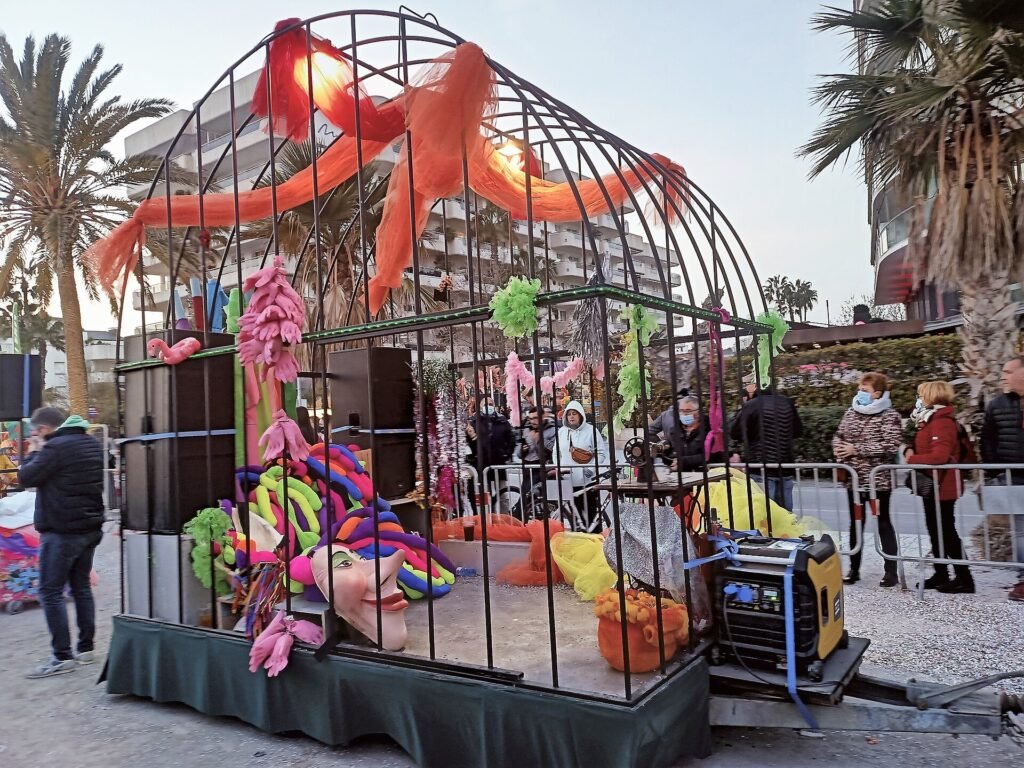

The Sitges Carnival is now one of the most crowded events in Catalonia, with thousands of people in costume and floats parading through town at night. Behind the parades, however, lies a long and eventful history: centuries of bans, a rivalry between two social clubs, a clandestine existence under Franco and a return to the streets that turned fifty in 2026.
The first documentary traces
According to the Penedès Intangible Heritage Inventory, the first written document mentioning a Carnival dance in Sitges dates from 1586 and refers to the “vespre de Carnestoltes” (Carnival eve). Some local publications place references as early as the 15th century, although we have not been able to check the specific document. At that time the Carnival season ran from after Christmas until Lent.
The 18th century was a time of restrictions. In 1763 the local magistrate (batlle) banned costumes and masks; in 1766 they were allowed again, but not after eight in the evening and without obscene language. The Bourbon monarchy banned masks in 1774 and their sale in 1784, and in 1799 Charles IV forbade throwing eggs filled with water, flour or mud. If anything, the successive bans show that the festival was still very much alive.
El Retiro and El Prado: a rivalry that made the festival grow
In the mid-19th century masked balls regained their splendour and, with the money and tastes of the americanos returning from Cuba, the festival moved from the guilds to the social clubs. The Casino Primero, founded in 1861, became the Societat Recreativa El Retiro in 1870, and the Casino Prado Suburense was born in 1877. The competition between the two for the best balls and floats has shaped Carnival ever since.
Popular memory recorded in the Diputació de Barcelona inventory tells of a Carnestoltes (the Carnival king) who arrived by sea with great ceremony, of battles with confetti and sweets, and of a final burial procession that set out from the La Palla society. These are undated recollections, best read as oral tradition. Other facts are better documented: in 1887 the mayor banned battles with almonds and eggs, in 1898 costumes likely to cause international conflict were banned — in the middle of the Cuban crisis — and the name Rua de l’Extermini is already recorded in 1925.
Ban and clandestinity
The Civil War changed everything. In 1936 the Prado became the Casa del Poble and the Retiro the Ateneu Cultural Proletari. On 3 February 1937 an order of the Junta Técnica del Estado suspended Carnival in the Nationalist zone, and in 1940 the Ministry of the Interior upheld the ban. In Sitges the festival survived behind closed doors: in the 1940s the two clubs held “winter balls” or “end-of-season balls”, a name that allowed people to dress up without saying Carnival.
According to the Penedès inventory, masks returned in 1953 thanks to a tacit agreement between the local authorities and the clubs, and in 1959 a car rally organised as a tourist attraction and the xatonada (a communal meal of xató salad) became part of the festival. In the 1960s Carnival began, cautiously, to venture back onto the streets.
The “Carnival of Democracy”
The full revival came in February 1976, a few months after Franco’s death, when the Retiro took Carnival back onto the streets; the Prado joined in 1977 and its floats appeared in 1978. From 1980 the town council set up a committee, provided funding and established the Arribo (arrival) and Burial of Carnestoltes as fixed events. In 1994 independent groups emerged, breaking the two clubs’ monopoly.
In those years the gay community played a prominent part in the Sitges carnival atmosphere. According to the association Colors Sitges Link, in 1982 a gay venue was refused permission to put up a marquee for street dances, and much of its celebration moved into bars and private venues. Even so, its presence is today one of the hallmarks of the Sitges Carnival.
A festival that looks back
In 2026 the Museus de Sitges marked fifty years since Carnival returned to the streets with an exhibition at the Retiro and Prado clubs. It is a good reminder that Sunday’s Rua de la Disbauxa and Tuesday’s Rua de l’Extermini are heirs to a tradition that survived almost everything. For the dates of the next edition, check the what’s on page.
Sources and further reading
- Carnaval de Sitges — Penedès Intangible Heritage Inventory
- La Festa de Carnestoltes (Sitges) — Cultural Heritage Inventory, Diputació de Barcelona
- Sitges s’estrena a Memòria en Xarxa amb una mostra sobre els 50 anys del Carnaval al carrer — Eix Diari
- El Carnaval Gay de Sitges — Colors Sitges Link
- Sitges, el carnaval (Arola Editors, 2006)
Keep reading
Traditions and legends
The seafaring festivals of Sitges
Sant Elm, the Mare de Déu del Vinyet and the Carme boat procession: which seafaring festivals are held in Sitges and what the sources actually say.
Traditions and legends
Giants and traditional festival figures of Sitges
The Christian, Moorish and Cuban giants, the 1922 Drac, the Àliga, the Diables and the Moixiganga: the documented story of the Sitges Festa Major figures.
Traditions and legends
Legends and folk tales of Sitges
The Virgin of El Vinyet, the treasure caves and the sirens of the Garraf coast: the legends of Sitges collected by Joan Amades, told as legends.