The history of the Sitges Festa Major
From its first mention in 1353 to heritage festival of national interest: how the Festa Major of Sant Bartomeu in Sitges began and has evolved.
Published 4 min read
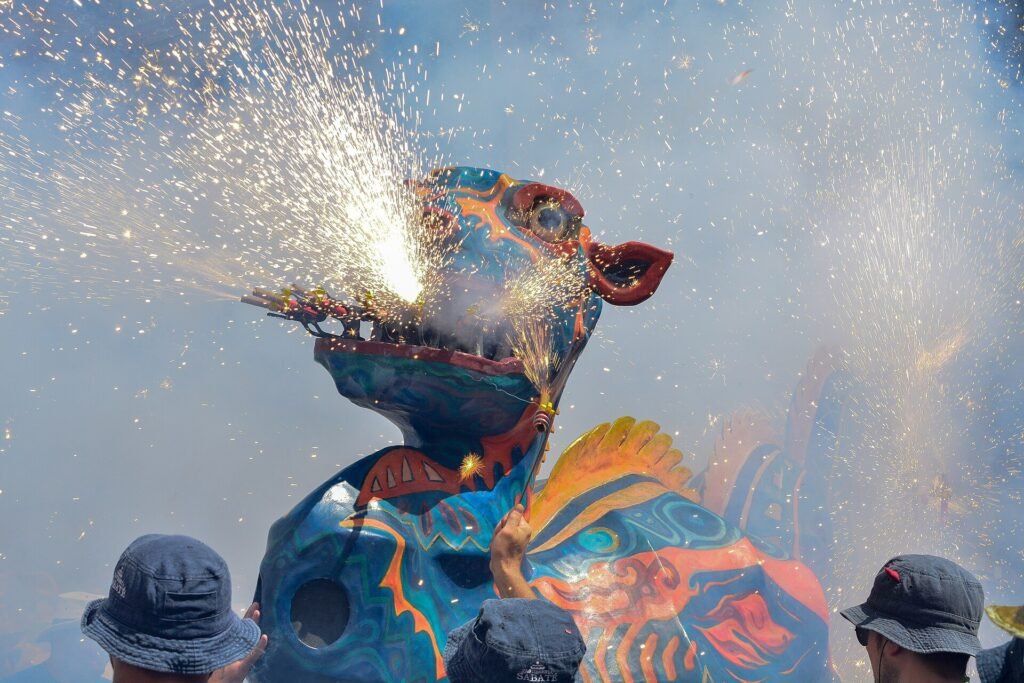

Every 23 August at midday, the boom of mortar salvos and the peal of church bells announce that Sitges is entering its Festa Major. What looks today like a spontaneous outburst of gunpowder, music and dancing is in fact the result of almost seven centuries of documented history, during which the festival has changed hands, organisers and elements while keeping a remarkably stable structure.
A documented medieval festival
The oldest known reference dates from 1353. That year the procurator of the Pia Almoina — the charitable institution of Barcelona Cathedral that then held the lordship of Sitges castle — wrote in his account books, under 24 August: “Sent Bertomeu, festa solepna a Ciges” (Sant Bartomeu, solemn feast in Sitges). The celebration already included the eve. Sant Bartomeu and Santa Tecla have been co-patrons of the town and parish since the Middle Ages, although the origin of this double dedication is not known for certain.
In the following centuries the festival was run by the Confraria de Sant Bartomeu i Santa Tecla, a confraternity founded in the 16th century. The first reference to a solemn mass for Sant Bartomeu dates from 1595, and the first record of one for Santa Tecla from 1709. The heritage inventory of the Diputació de Barcelona also records a custom dated 1598, the llevant de taula: members went from house to house collecting donations to pay for the festival.
From confraternity to town council
In the 19th century the confraternity was dissolved — sources place this around 1836 or in 1839 — and the municipality took over the organisation. One of the festival’s most unusual features stems from that transition: the images of the saints came to be kept in private homes, Sant Bartomeu’s in the mayor’s house, and until the 1970s they were carried to church in tabernacles. Even today, on the afternoon of 23 August, a civic procession with no church authorities accompanies the saint to the church of Sant Bartomeu i Santa Tecla.
In 1843 the Diario de Barcelona published the first detailed list of events, and it already includes almost everything recognisable today: a fireworks display, street parades with dances, the solemn mass, the procession and the evening dance. The oldest surviving printed programme dates from 1866. The fireworks, previously set off elsewhere in town, moved in 1894 to the Baluard, next to La Punta, where they remain one of the busiest moments of the festival.
The dances and the popular procession
The festive procession has roots older than the Festa Major’s own records. In 1734, at the consecration of the Vinyet church, dances and street interludes brought in from elsewhere performed, and in 1814 a description of a Sitges procession mentions giants, the tarasca (or dragon) and dances. The old Gegants Moros (Moorish giants) were built in 1840. The first press report detailing the dances at the patron saint’s festival dates from 1853 and names the Diables, Bastons, Gitanes, Cercolets, Moixiganga and a Sant Bartomeu dance that no longer exists. It is sometimes said that the Moixiganga, which depicts scenes from the Passion, already took part in the medieval Corpus procession, but this is an assumption with no documents to support it.
In the late 1970s, after the Agrupació de Balls Populars de Sitges was founded (1978), elements were revived or added, and women joined what had until then been an all-male procession. The panderetes and cintes dances, the castells (human towers) and the Àliga (eagle) are additions from recent decades. Today around 800 people take part, and the giants, dragon and other figures have their own article in Giants and traditional figures of Sitges.
Organisation and recognition
Many hands have run the festival: a residents’ committee in 1869, the first official festivities committee in 1893, the Atracció de Forasters association in the 1920s and 1930s and, after the Civil War, a municipal committee. The opening proclamation (pregó) was added in 1985. Several sources state that the festival was declared a Festa Tradicional d’Interès Nacional in 1991, and on 19 July 2016 the Catalan Government declared it a Festa Patrimonial d’Interès Nacional (heritage festival of national interest, Agreement GOV/104/2016), together with the Santa Tecla festival.
A tradition that keeps renewing itself
The Sitges Festa Major is not a frozen relic: it has survived wars, political change and social transformation by gaining and losing elements. What keeps it recognisable is a sequence of events documented since 1843 and very broad local participation.
Sources and further reading
- Visió històrica — Festa Major de Sitges (official website)
- Recorregut històric del Seguici Popular — Festa Major de Sitges
- Festa Major de Sitges en honor a Sant Bartomeu i Santa Tecla — Patrimoni Festiu, Government of Catalonia
- La Festa Major de Sitges (record 08270-646) — Cultural Heritage Inventory, Diputació de Barcelona
- Rocha i Serra, Joan Josep: La Festa Major de Sitges (Estudis Sitgetans, 1997) — Grup d’Estudis Sitgetans
Keep reading
Traditions and legends
The seafaring festivals of Sitges
Sant Elm, the Mare de Déu del Vinyet and the Carme boat procession: which seafaring festivals are held in Sitges and what the sources actually say.
Traditions and legends
Legends and folk tales of Sitges
The Virgin of El Vinyet, the treasure caves and the sirens of the Garraf coast: the legends of Sitges collected by Joan Amades, told as legends.
Traditions and legends
Corpus Christi and the flower carpets of Sitges
From the first record in 1360 to today's 300,000 carnations: how Corpus Christi in Sitges and its flower carpets began and evolved over time.